

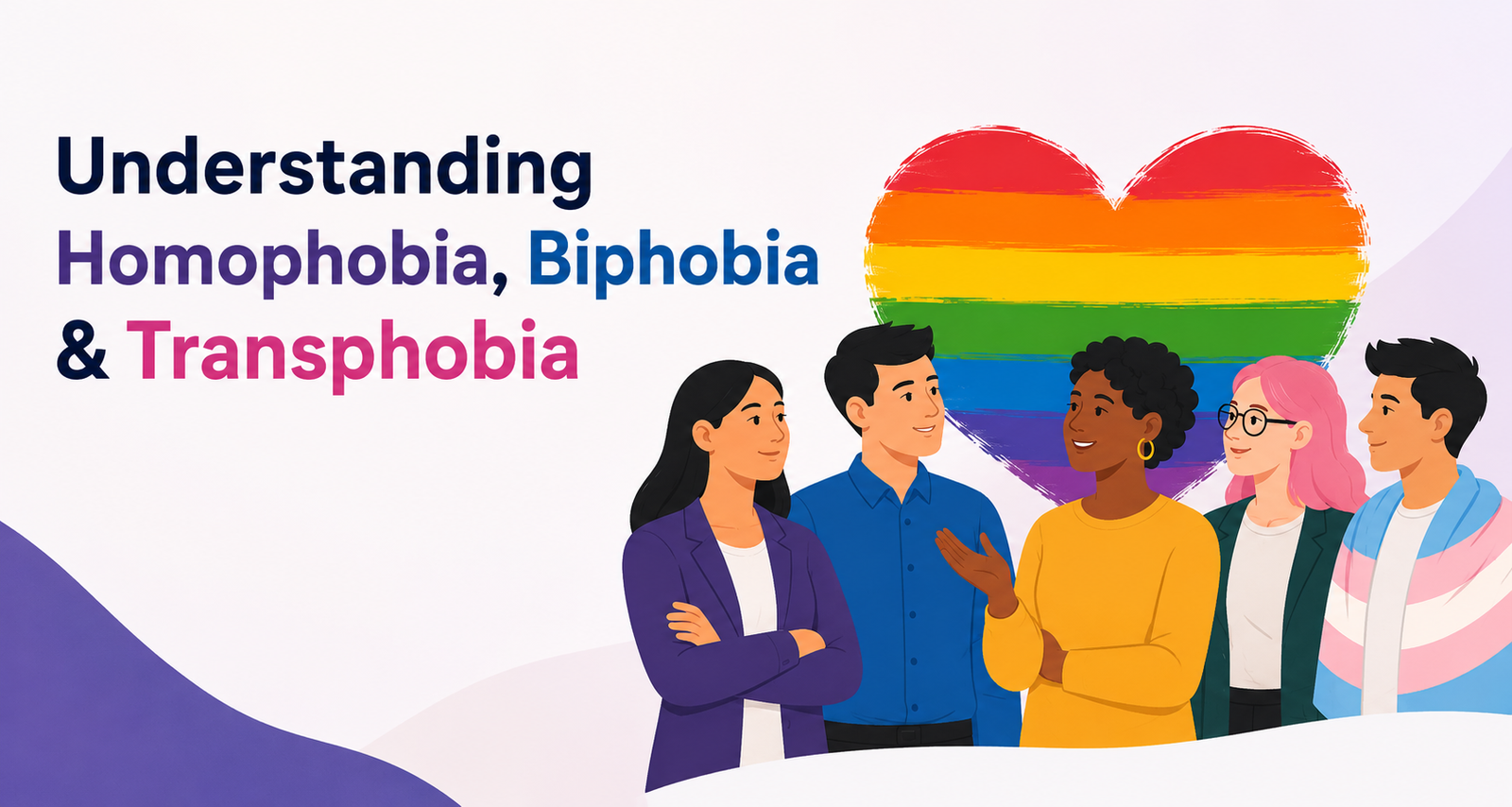
Every year on 17 May, the world observes the International Day Against Homophobia, Biphobia and Transphobia (IDAHOBIT) to raise awareness about discrimination, violence, and exclusion faced by LGBTQIA+ individuals. The date marks the historic decision by the World Health Organization (WHO) in 1990 to remove homosexuality from the list of mental disorders. Organizations across the globe use this day to promote dignity, equality, inclusion, and respectful workplace behavior.
In the context of POSH and workplace ethics, IDAHOBIT reinforces the importance of creating safe and inclusive environments free from bullying, harassment, discriminatory jokes, intimidation, or exclusion based on sexual orientation or gender identity. Recognizing this day encourages employees to foster empathy, respect diversity, and uphold every individual’s right to work with dignity.
Homophobia, Biphobia, and Transphobia refer to prejudice, fear, discrimination, harassment, or hostility toward people because of their sexual orientation or gender identity.
Homophobia : Negative attitudes, bias, or discrimination against people who are gay or lesbian.
Examples:
- Mocking someone for being gay
- Excluding a colleague because of their sexual orientation
- Using slurs or offensive jokes
Biphobia: Prejudice or discrimination against bisexual people (people attracted to more than one gender).
Examples:
- Saying bisexuality is “just confusion”
- Treating bisexual employees as untrustworthy or “indecisive”
- Making inappropriate sexual comments
Transphobia: Fear, hatred, discomfort, or discrimination toward transgender or gender-diverse individuals.
Examples:
- Refusing to use a person’s chosen name or pronouns
- Humiliating or questioning someone’s gender identity
- Denying equal opportunities or creating a hostile work environment
How this relates to POSH (Prevention of Sexual Harassment)
Under POSH principles, workplace harassment is not limited to physical misconduct or sexual advances. A hostile, humiliating, intimidating, or offensive environment based on gender, sexuality, or identity can also amount to workplace harassment.
In many organizations and modern workplace policies:
- Homophobic, biphobic, or transphobic remarks can create a hostile work environment
- Repeated jokes, comments, bullying, exclusion, or targeting LGBTQIA+ employees may qualify as sexual harassment or gender-based harassment
- POSH committees are increasingly expected to handle complaints involving dignity, respect, inclusion, and discrimination linked to sexuality or gender identity
Examples in a workplace POSH context
Could Be POSH Violations
- Repeatedly making jokes about someone being gay
- Asking invasive questions about a transgender colleague’s body or personal life
- Sharing memes mocking LGBTQIA+ people in office groups
- Refusing to work with someone because of their sexual orientation
- Outing someone’s sexuality without consent
- Misgendering someone intentionally after correction
These behaviors can:
- Affect psychological safety
- Create humiliation or intimidation
- Impact equal participation at work
Why Organizations should include this aspect in POSH Trainings
Modern POSH and workplace dignity programs aim to ensure:
- Respectful behavior for all employees
- Inclusion and equal opportunity
- Freedom from bullying and identity-based harassment
- Safe workplaces irrespective of gender identity or sexual orientation
This aligns with:
- Indian constitutional principles of dignity and equality
- The Supreme Court’s recognition of LGBTQIA+ rights (e.g., Navtej Johar judgment)
- DEI (Diversity, Equity & Inclusion) frameworks adopted by many companies